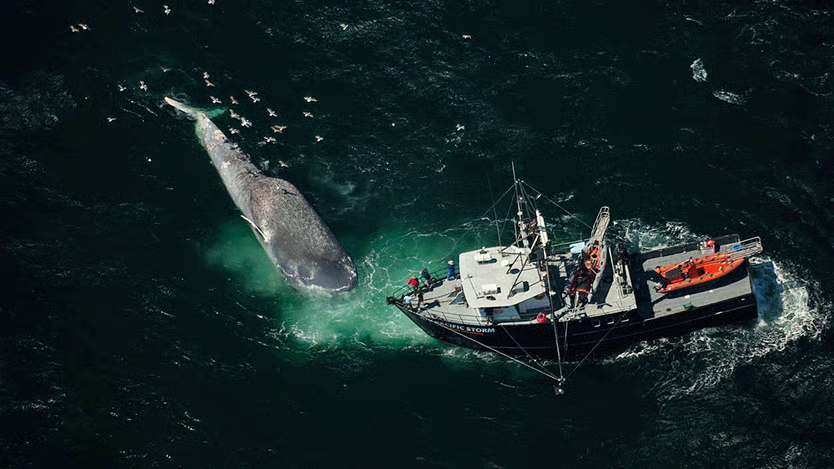
Marine Mammal Awareness for Shipboard Personnel
$199.00 $250.00
Availability:In Stock
Course Overview
The Introduction to Vessel Strike Mitigation course is a comprehensive, practical training programme designed to equip seafarers, vessel operators, marine professionals, and offshore personnel with the knowledge and skills required to identify, avoid, and mitigate vessel strikes involving whales.
The programme explains the environmental, operational, and regulatory implications of vessel strikes, while providing clear, actionable guidance on whale detection, species identification, risk behaviours, avoidance techniques, and incident reporting. Emphasis is placed on real-world decision-making at sea, aligned with international best practice.
Learning Outcomes
Upon successful completion of this course, participants will be able to:
-
Explain the vessel strike threat, including its ecological impact on large whale populations and the operational, legal, and reputational risks to the shipping and offshore industries
-
Recognise high-risk situations and locations where vessel strikes are more likely to occur
-
Identify large whales at sea using key visual indicators such as blows, body shape, surfacing patterns, dorsal fins, and flukes
-
Differentiate between major whale species commonly involved in vessel strike incidents and identify species at heightened risk
-
Interpret whale behaviour and understand how feeding, resting, breaching, and surface logging increase collision risk
-
Apply best-practice whale avoidance measures, including speed reduction, course alteration, lookout enhancement, and situational awareness
-
Navigate safely through designated vessel strike management areas, understanding routing schemes, speed restrictions, and seasonal measures
-
Access authoritative guidance and management resources relevant to global vessel strike hotspots
-
Understand the importance of vessel strike reporting, including when, where, and how to report both confirmed and suspected incidents
Course Structure & Modules
Module 1: Introduction to Vessel Strike
-
Definition and global context of vessel strikes
-
Why vessel strikes occur
-
Environmental and industry consequences
-
Legal, regulatory, and reputational considerations
Module 2: Species at Risk
-
Overview of large whale species most vulnerable to vessel strikes
-
Species distribution and migratory corridors
-
Seasonal risk patterns
-
Conservation status and sensitivity
Module 3: Whale Identification
-
Visual cues for spotting whales at sea
-
Species-specific identification features
-
Behavioural clues linked to strike risk
-
Practical identification scenarios
Module 4: Steps for Whale Avoidance
-
Early detection and lookout strategies
-
Speed management and course alteration
-
Safe distances and manoeuvring principles
-
Decision-making under operational constraints
Module 5: Vessel Strike Mitigation Measures
-
International best-practice mitigation frameworks
-
Vessel-based mitigation measures
-
Area-based management tools (speed limits, routing, exclusion zones)
-
Operational planning for high-risk areas
Module 6: Reporting Vessel Strike Events
-
Why reporting matters for conservation and safety
-
What constitutes a reportable event
-
Reporting procedures and responsible authorities
-
Best practices for documentation and follow-up
Target Audience
-
Ship masters and deck officers
-
Marine pilots and vessel traffic personnel
-
Offshore and marine operations teams
-
Environmental officers and observers
-
Marine surveyors and consultants
-
Maritime students and early-career professionals
| color | Red |
|---|
There are no reviews yet.